Skip to content
FREE SHIPPING ON ALL ORDERS
Permeable Paver Selector — Find the Right Grass or Gravel Paver for Your Project | Longview Supply

Permeable Paver Selector — Find the Right Grass or Gravel Paver for Your Project

Answer a couple of plain-language questions and get matched to the exact NDS permeable paver you need — grass or gravel, roll or rigid panel — with live pricing and a one-click, cart-ready parts list.

Interactive Tool

Permaloc Aluminum Edging Selector — Find the Right Edging for Your Project

Answer a few plain-language questions and get matched to the exact Permaloc aluminum landscape edging you need — with the right stakes and connectors, live pricing, and a one-click parts list.

Interactive Tool

Choosing aluminum landscape edging gets complicated fast: Permaloc alone makes eleven different product lines, each in several heights, two or three gauges, and up to five finishes. The Permaloc Aluminum Edging Selector above cuts through that. Tell it what kind of job you are doing, how heavy-duty it needs to be, how tall the edging should stand, and which finish you want — and it matches you to the exact products we stock, recommends the right stakes and connectors, and builds a single parts list with live pricing you can add to your cart. It is built for contractors who already know the line they want and for first-time buyers who would rather be guided than guess.

Why aluminum landscape edging

Permaloc CleanLine aluminum landscape edging installed with stakes

Aluminum edging is the professional standard for separating landscape materials because it solves the problems that plague the alternatives. Steel rusts and bleeds stains; plastic gets brittle, heaves in frost, and develops a wavy line within a season or two. Permaloc's commercial-grade aluminum will not rust, flexes into smooth curves without kinking, and holds a crisp, intentional line for the life of the installation. It is also made from recycled aluminum and is fully recyclable, and several lines contribute toward LEED points.

The single most important decision is the product line, because each one is engineered for a specific job — bed edging, paver restraint, asphalt restraint, athletic surfaces, or green roofs. Get that right and the rest (height, gauge, finish) falls into place quickly.

The Permaloc product lines at a glance

Product lineBest forTypical heights
CleanLineCommercial bed edging — turf, mulch, gravel3" – 5.5"
CleanLine XLDeep beds, tree surrounds, green roofs5" – 12"
ProLineResidential & light-commercial bed edging4"
ProSlideFast sliding-stake bed edging4" – 5.5"
ProSlide LTLighter sliding-stake residential edging4"
PermaStripAggregate retention & maintenance strips3.5" – 6"
StructurEdgePaver restraint, under or beside pavers1-5/8" – 2-1/4"
BrickBlockEconomical paver restraint, straight & curved1.75" – 2.75"
AsphaltEdgeAsphalt & permeable pavement restraint1" – 6" reveal
AthletEdgeRunning tracks & sport-court restraint2" – 6"
GeoEdgeGreen roofs & permeable pavement systems3" – 8.5"

Match the edging to your application

Landscape beds

Separate turf from mulch, soil, or stone. Use CleanLine, ProLine, ProSlide, ProSlide LT, or CleanLine XL for deeper beds.

Aggregate walkways

Hold decomposed granite or pea gravel in place. Use PermaStrip, AsphaltEdge, or CleanLine XL.

Brick pavers

Restrain patios, walks, and driveways. Use StructurEdge, BrickBlock, or AsphaltEdge.

Asphalt surfaces

Get a clean 90° asphalt edge. Use AsphaltEdge or AthletEdge.

Permeable pavement

Restrain permeable systems with BrickBlock, GeoEdge, or AsphaltEdge.

Green roofs

Contain growing medium and rooftop pavers with GeoEdge or CleanLine XL.

Not sure? Most landscape-bed jobs use CleanLine (commercial) or ProLine (residential). Most paver jobs use StructurEdge or BrickBlock. When in doubt, the selector above starts with your application and narrows from there.

Gauge, height, and finish explained

Gauge (aluminum thickness)

Gauge is how thick the aluminum is, and it drives how much abuse the edging can take. 1/8 inch is the everyday workhorse for residential and light-commercial work. 3/16 inch is the heavy-duty choice for commercial sites, high-traffic areas, and edges exposed to vehicles or equipment. A few paver-restraint lines also offer a lighter 3/32 inch for economy runs.

Height

Taller edging holds back more material and resists movement, at the cost of more aluminum and deeper staking. For beds, 4 inches is the most common height; step up to 5.5 inches or more for deep beds, loose aggregate, or noticeable grade changes. Paver and asphalt restraints are measured differently — by the reveal and base that match your paver or pavement thickness.

Finish

Finish is about looks and durability. Mill finish is raw aluminum and the most economical. DuraFlex is a flexible colored coating — black, green, or bronze — that visually disappears into the landscape and resists scuffing. Black Anodized is an electrochemical finish that delivers the deepest, most durable dark color.

Stakes, connectors, and accessories

Permaloc edging connection and stake accessories

Edging is only as good as what holds it down. Permaloc's interlocking lines use aluminum stakes — typically 12 inches for CleanLine and ProLine, 18 inches for PermaStrip — driven through built-in stake guides. Sliding-stake lines like ProSlide accept stakes anywhere along the run. Connectors join sections end-to-end without weak joints, grade-change pieces step the edging up or down a slope, and corners turn tight angles cleanly. The selector recommends the correct accessories — matched to your finish where possible — so you do not arrive on site short on hardware.

How much edging do I need?

Measure the total linear footage of the lines you need to edge, then divide by the section length — most landscape lines come in 8-foot and 16-foot sticks, sold by the carton. Add a little extra for overlap at joints and for curves, which consume more material than straight runs. For staking, plan on roughly one stake every 3 feet (about 11 per 100 feet), adding stakes on curves and slopes. If you are estimating a large or unusually shaped site and want a second set of eyes, our team specs orders with contractors every day at (800) 621-5381.

Installation basics

Proper installation is what keeps an edge crisp for years. Lay the edging along the line and tap it to grade, keeping the top consistent with the finished surface. For interlocking lines, slide adjoining sections together so the connection locks before staking. Drive stakes through the stake guides at the recommended spacing, angling them slightly back into the bed on curves. For paver and asphalt restraints, set the base under or against the pavement before backfilling and compacting. Backfill behind the edging, compact, and finish flush. Inspect after the first heavy rain and re-seat any stakes that worked loose.

Shop Permaloc edging

Permaloc CleanLine edging

CleanLine & ProLine

Commercial and residential landscape-bed edging with interlocking stakes.

Shop Bed Edging
Permaloc StructurEdge paver restraint

Paver Restraints

StructurEdge and BrickBlock hold patios, walks, and driveways in place.

Shop Paver Restraint
Permaloc GeoEdge green roof and permeable edging

GeoEdge & Asphalt

Restraints for asphalt, permeable pavement, and green roofs.

Shop GeoEdge

Frequently Asked Questions

What is aluminum landscape edging used for?

Aluminum landscape edging creates a clean, permanent separation between landscape materials — turf and beds, gravel and pavers, asphalt and soil. Permaloc aluminum edging is commercial-grade, will not rust like steel or become brittle like plastic, flexes into smooth curves, and holds a crisp line for the life of the project.

Which Permaloc edging should I choose?

Start with the application. CleanLine, ProLine, ProSlide, and ProSlide LT are landscape-bed edgings; CleanLine XL handles deep beds and green roofs; PermaStrip is a maintenance strip for aggregate; StructurEdge and BrickBlock are paver restraints; AsphaltEdge restrains asphalt and permeable pavement; AthletEdge restrains athletic surfaces; and GeoEdge is for green roofs and permeable pavement. The selector on this page walks you to the right line, height, gauge, and finish.

What gauge of aluminum edging do I need?

Gauge is the thickness of the aluminum. 1/8 inch is the everyday standard for most residential and light-commercial work, while 3/16 inch is the heavy-duty choice for commercial sites, high-traffic areas, and edges that take vehicle or equipment loads. A few paver-restraint lines also offer a lighter 3/32 inch.

How many stakes do I need for landscape edging?

A common rule is one stake about every 3 feet, which works out to roughly three stakes per 8-foot section and about 11 per 100 feet. Add extra stakes on curves and slopes. The selector recommends the correct stakes for the product line you choose.

What is the difference between Mill, DuraFlex, and Anodized finishes?

Mill finish is raw mill aluminum and the most economical. DuraFlex is a flexible colored coating available in black, green, and bronze that hides the edging in the landscape and resists scuffing. Black Anodized is an electrochemical finish that gives the deepest, most durable dark color.

Does aluminum landscape edging come in different lengths?

Most Permaloc landscape lines come in 8-foot and 16-foot sections, sold by the carton. Sixteen-foot sticks mean fewer joints on long straight runs; 8-foot sticks are easier to handle and ship. The selector shows the lengths available for each profile.

Ready to choose your edging?

Use the Permaloc Aluminum Edging Selector at the top of this page to get a product match, see current pricing, and build your parts list. Prefer to talk it through? Our team specs orders with contractors every day at (800) 621-5381.

Use the Edging Selector

Choosing permeable pavers sounds simple until you are weighing a grass surface against a gravel one, a 150-foot roll against a small pad, and a light residential driveway against an H-20 fire lane. The Permeable Paver Selector above walks you through what you are paving, whether you want a grass or gravel surface, and how much load it has to carry — then matches you to the exact NDS product we stock, shows live pricing, and builds a cart-ready parts list. It is made for contractors who already know the spec and for first-time buyers who would rather be guided than guess.

What permeable pavers are and why the type matters

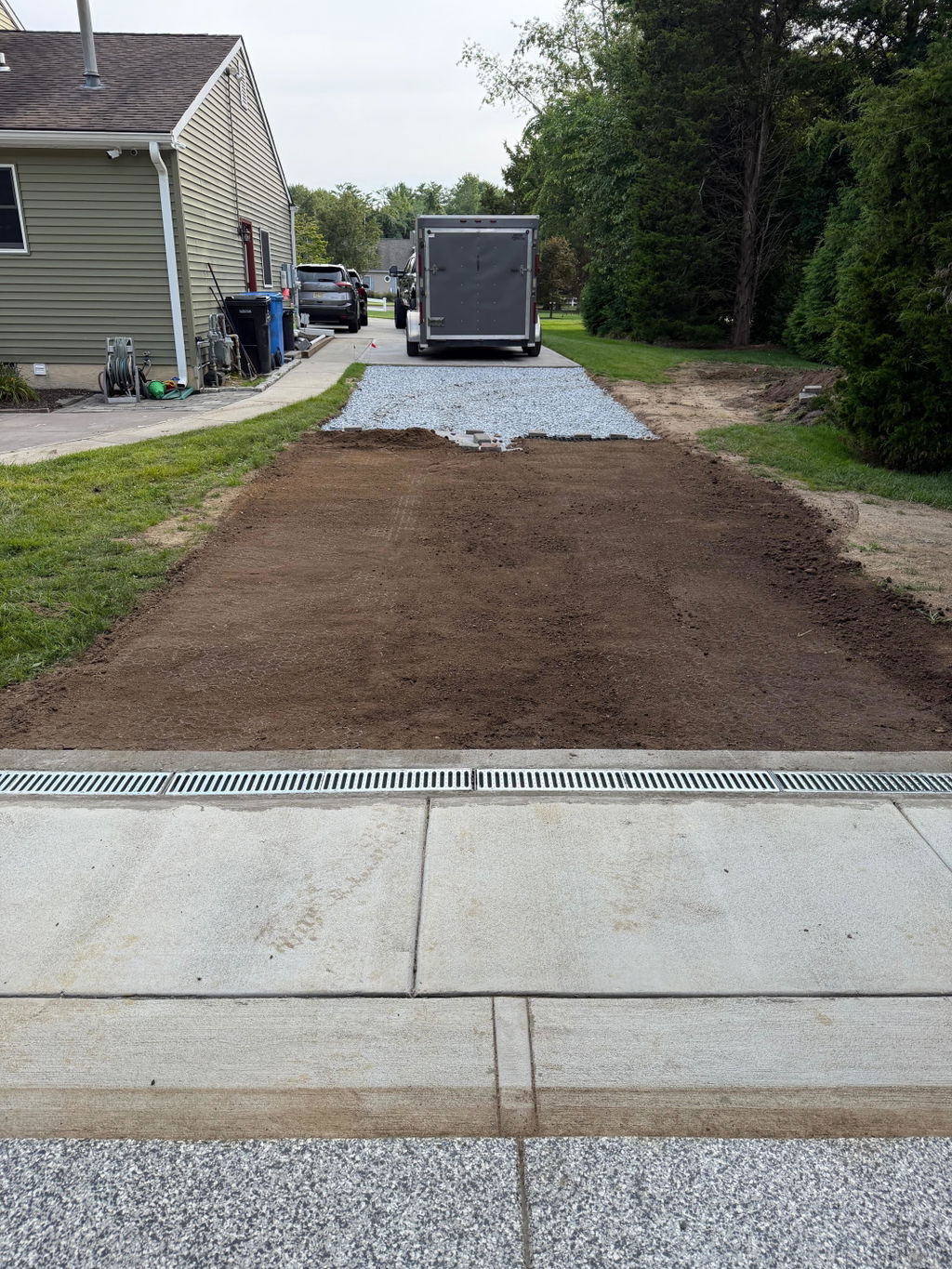
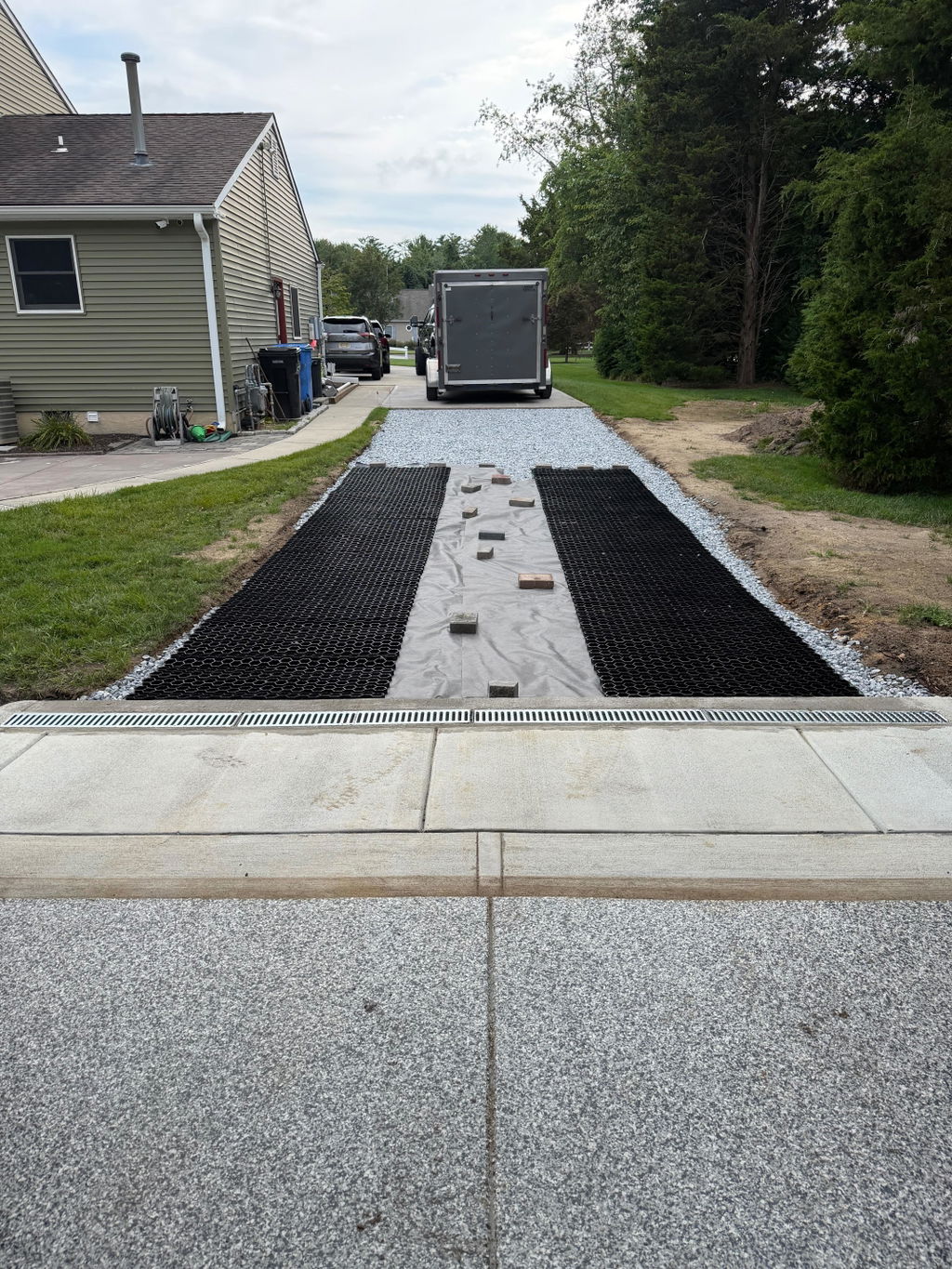
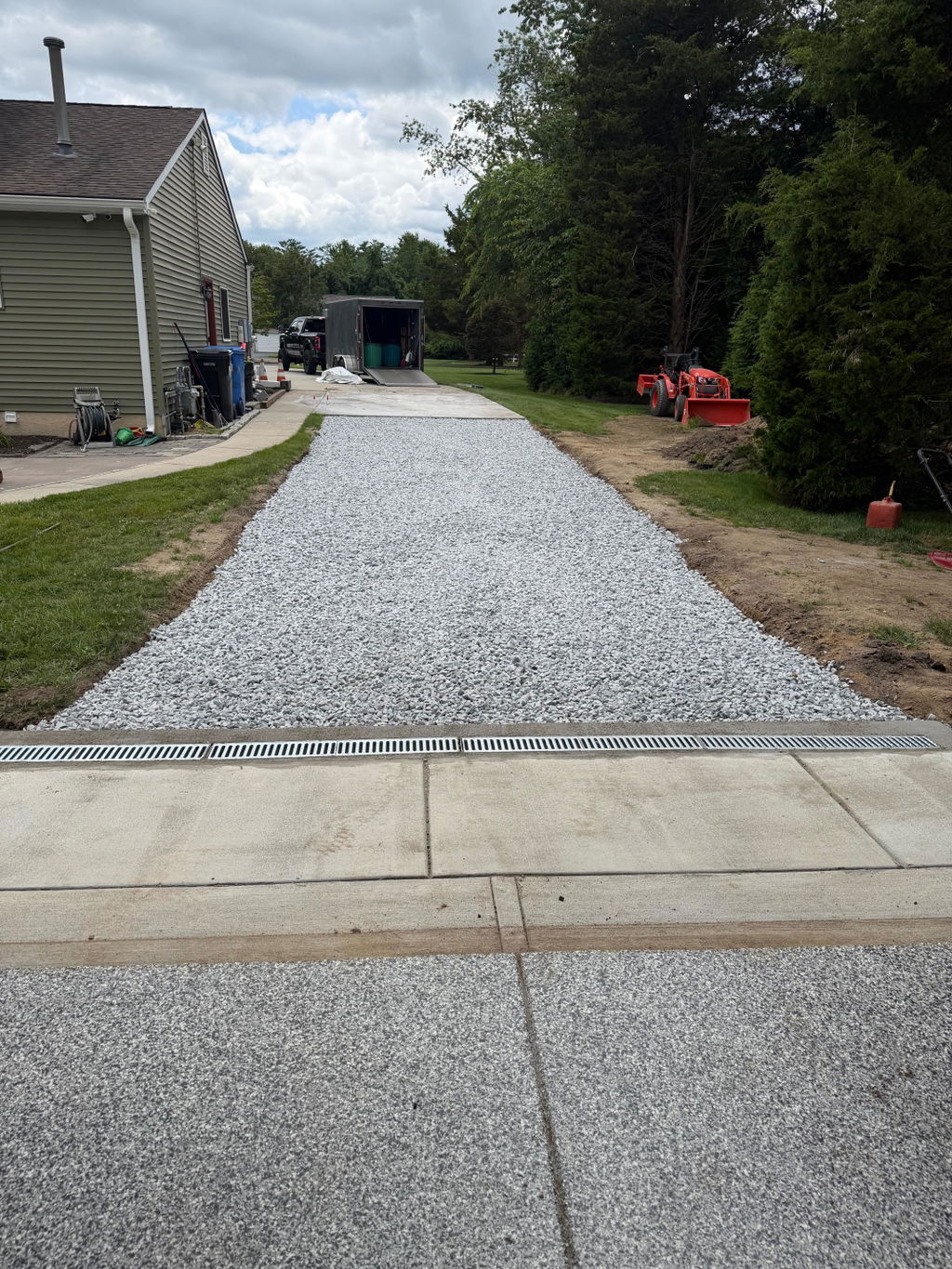
Permeable gravel paver driveway in front of a house

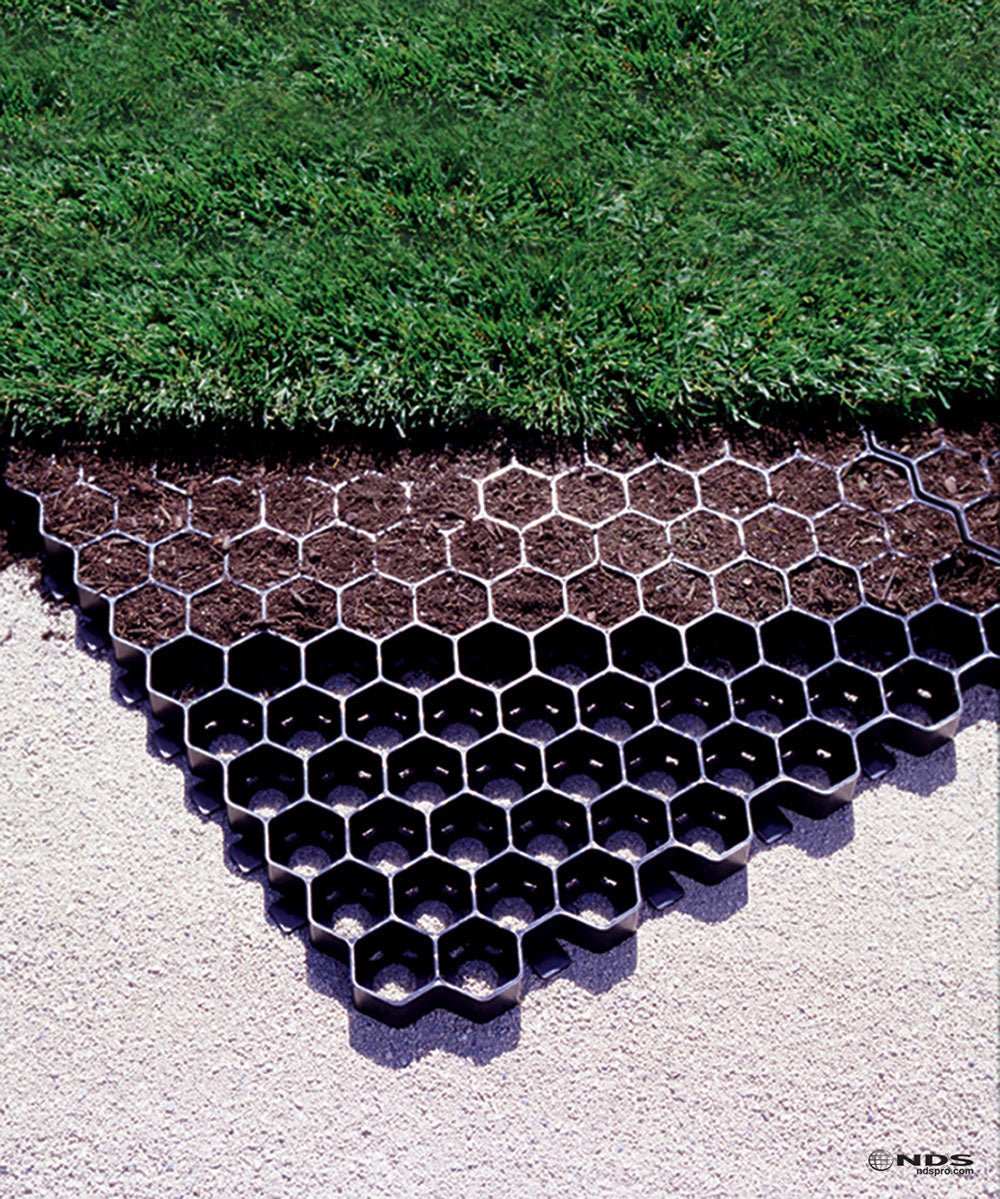
Permeable pavers are a load-transferring grid or panel system that stabilizes a grass or gravel surface while letting stormwater drain straight through instead of running off. The honeycomb or webbed cells confine the fill material — turf for grass pavers, crushed stone for gravel pavers — so that a driveway, parking area, or access road stays firm and drivable yet remains permeable. Done right, the surface resists rutting and washout, supports vehicle loads, and helps a site manage stormwater on-site rather than shedding it to the street.

The first decision is the type of paver, because it determines how the surface looks, how it is filled, and how much load it can carry:

Grass pavers

Reinforce turf so it can take occasional traffic. Cells hold soil and let grass grow through for a green, natural surface. Available in roll form for fast installs.

Gravel pavers

Confine crushed stone in a roll-out grid with attached fabric. A firm, road-like surface that resists rutting and stays permeable. Great for driveways and lanes.

Rigid panels (TuffTrack)

Interlocking 2' x 2' panels rated to 81,744 psf — strong enough for fire trucks and heavy equipment. Works with either grass or gravel fill.

Grass pavers vs. gravel pavers

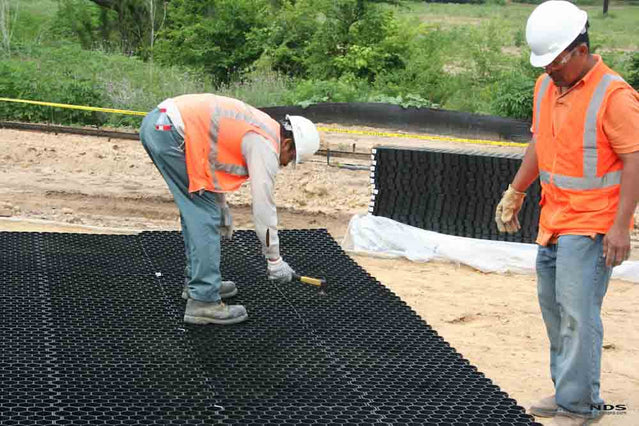
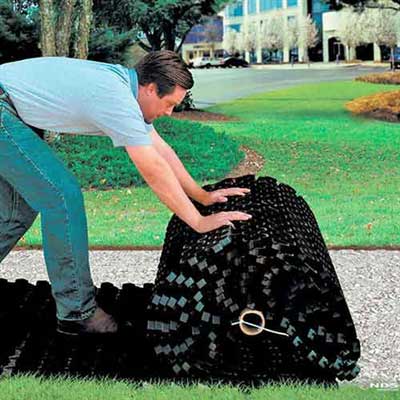
NDS EZ Roll gravel paver honeycomb grid rolled out Installing NDS permeable paver grid on a prepared base

If you take away one idea, make it this: grass pavers are for a green surface where turf grows up through the cells, while gravel pavers are for a firm stone surface where crushed gravel is locked into the cells. Both are permeable and both transfer vehicle weight down to a compacted base, but they create very different finished looks. Grass pavers suit overflow parking, fire lanes through landscaping, and turf areas that occasionally see vehicles. Gravel pavers suit driveways, parking lots, trails, and access roads where you want a stable, drivable stone surface that does not rut, wash, or migrate the way loose gravel does.
How permeable pavers work

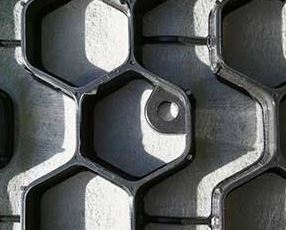
A rigid cellular grid is laid over a compacted aggregate base. The cells confine the fill and transfer vehicle loads down to the base course instead of letting tires displace the surface. At the same time, the open cell structure — and, on the gravel roll, an attached geotextile fabric — lets water infiltrate through to the ground rather than pooling on top or running off the edges. That combination is what makes the surface both drivable and permeable. The fabric on the EZ Roll gravel paver also separates the stone from the soil below, so the fill does not sink and disappear into the subgrade over time.

Rule of thumb: the grid does not replace a proper base. Match your base depth and compaction to the load, and the paver system keeps that surface flat, clean, and drivable with far less maintenance than loose gravel or bare turf.

Load ratings and choosing by traffic

Pick the product to the heaviest vehicle the surface will see. The two EZ Roll systems carry a compressive strength of 57,890 psf when empty, which covers the great majority of residential and light-commercial uses. For fire lanes, loading docks, and anywhere an H-20 vehicle such as a fire truck must travel, the rigid TuffTrack panel steps up to 81,744 psf.

ProductFormStrength (empty)Best for
EZ Roll Grass Paver4' roll57,890 psfTurf parking, fire lanes through landscaping, green overflow areas
EZ Roll Gravel Paver4' roll57,890 psfGravel driveways, parking, trails, and access roads
TuffTrack Panel2' x 2' rigid81,744 psfFire trucks, H-20 loads, heavy equipment routes

Base depth and coverage

Two questions decide your order: will it carry the load, and how much do I need? For base depth, a common minimum is a 6-inch compacted aggregate base for cars and light trucks and an 8-inch base for heavy loads like fire trucks, with grade limits depending on the load. Poor soils or repeated heavy traffic usually justify more depth. For coverage, an EZ Roll gravel paver roll covers about 577 square feet and the small 4' x 24' grass roll covers about 96 square feet. Divide the area you are paving by the coverage per roll, then add a small allowance for trimming and overlap.

As a worked example, a 12-foot-wide by 80-foot-long gravel driveway is 960 square feet. At roughly 577 square feet per roll, you would plan on two rolls plus a small trim allowance, over a 6-inch-plus compacted base, filled with clean angular stone.

Marking stalls and lanes

Once the grid is installed and filled, EZ Marker domes snap into empty cells to lay out parking stalls, drive lanes, and fire lanes — no paint or striping needed. They are especially useful on overflow and event parking where you want clear guidance on a gravel or grass surface. EZ Markers are an add-on for a paver order, so when you build a match in the selector above you can add them right alongside your pavers.

Installation basics

Treat the job like a roadway section: excavate to depth, compact the subgrade, build and compact the aggregate base in lifts, then roll out the pavers with the fabric side down and anchor them so they do not shift during filling. Fill the cells with clean, angular stone (rounded pea gravel tends to migrate) — a common target is 3/8-inch clean crushed gravel — and top off so the grid is fully supported. Contain the edges with edging or a border to keep the surface tight over time, and the finished result drives like pavement while still looking like gravel or turf.
Shop permeable pavers

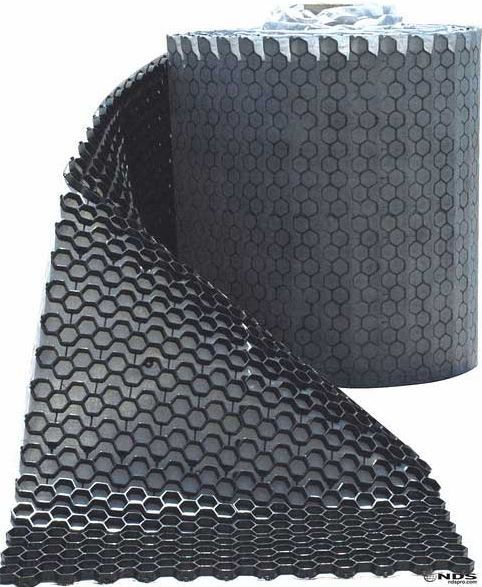
NDS EZ Roll gravel pavers 4 by 150 roll

NDS EZ Roll Gravel Pavers

Roll-out honeycomb grid with attached fabric. ~577 sq ft per 4' x 150' roll. Black, gray, red, tan.

Shop Gravel Pavers
NDS EZ Roll grass pavers roll

NDS EZ Roll Grass Pavers

Turf-reinforcement grid for a green, drivable surface. Available in 4' x 24' and 4' x 150' rolls.

Shop Grass Pavers
NDS TuffTrack rigid grass and gravel paver panel

NDS TuffTrack Panels

Rigid 2' x 2' panels rated to 81,744 psf for fire trucks and heavy loads. Grass or gravel fill.

Shop TuffTrack

Frequently Asked Questions

What are permeable pavers?

Permeable pavers are a load-transferring grid or panel system that stabilizes a grass or gravel surface while letting stormwater drain straight through instead of running off. Honeycomb or webbed cells confine the fill — turf for grass pavers, crushed stone for gravel pavers — so a driveway, parking area, or access road stays firm and drivable yet remains permeable.

What is the difference between grass pavers and gravel pavers?

Grass pavers hold soil and let turf grow up through the cells for a green, natural-looking surface that still supports vehicles. Gravel pavers confine crushed stone in the cells for a firm, road-like finish that resists rutting and washout. Both are permeable; the choice comes down to whether you want a green surface or a stone surface.

How do permeable pavers work?

A rigid cellular grid is laid over a compacted aggregate base. The cells confine the fill and transfer vehicle loads down to the base course instead of letting tires displace the surface, while the open structure and attached fabric let water infiltrate through to the ground below rather than pooling or running off.

How much base do I need under permeable pavers?

A common minimum is a 6-inch compacted aggregate base for cars and light trucks and an 8-inch base for heavy loads such as fire trucks (H-20), with grade limits depending on the load. Poor soils or repeated heavy traffic usually justify additional base depth. The base build is what turns the grid into a road-ready surface.

How much area does one roll of pavers cover?

An NDS EZ Roll gravel paver roll (4' x 150') covers about 577 square feet, and the 4' x 24' grass paver roll covers about 96 square feet. To estimate rolls, divide the area you are paving by the coverage per roll and add a small allowance for trimming and overlap.

Do permeable pavers count as impervious surface?

Permeable paver systems are designed to let water infiltrate, so they are generally treated as permeable rather than impervious in stormwater calculations. Local jurisdictions vary in how they credit them, so confirm with your local stormwater authority for your specific project.

Ready to choose your pavers?

Use the Permeable Paver Selector at the top of this page to get a product match, see current pricing, and build a cart-ready parts list. Prefer to talk it through? Our team specs paver projects with contractors every day at (800) 621-5381.

Use the Permeable Paver Selector