Grass Driveway Pavers: Drive on Grass Without Ruts
What grass driveway pavers are and how to choose and install them
Grass driveway pavers are reinforcement grids made specifically to turn a driveway into a drivable grass surface, carrying vehicle loads while letting grass grow and water drain through. Whether you call them driveway grass pavers or grass pavers for driveway use, the job is the same: a permeable, green driveway that will not rut or wash out. NDS offers both a roll-out and a rigid interlocking version.

What are grass driveway pavers?
Searches for grass pavers driveway and grass pavers for driveway both land here, since they describe the same product.
Grass driveway pavers (also driveway grass pavers or a grass paver driveway system) are the grids installed beneath a grass driveway surface. They spread the weight of vehicles across a compacted base so the soil inside the cells stays loose and the grass keeps growing. They are the difference between a green driveway that lasts and a patch of grass that turns to ruts and mud under tires.
How grass pavers work
A grass paver is a structural grid, usually a web of honeycomb cells, installed over a compacted, free-draining base. The grid carries vehicle and foot loads and transfers that weight down to the base, so the soil inside the cells never gets compacted. That protected soil lets grass roots grow and stay healthy, while rain infiltrates through the surface instead of running off. The result is a surface that looks like lawn but drives like pavement.
Choosing grass driveway pavers
- EZ Roll Grass Pavers: flexible honeycomb on a roll (4 by 150 or 4 by 24 foot), fast to install over large driveway areas and able to follow gentle contours.
- Tufftrack: rigid 2 by 2 foot interlocking pavers, 1-1/2 inch thick, for driveways with heavier vehicles or more frequent traffic.
Both carry vehicle loads; the roll covers ground quickly while the rigid paver suits the most demanding driveways.

Installing grass driveway pavers, in brief
Excavate and build a compacted, free-draining base to the engineer spec, then place the pavers, unroll the EZ Roll mat and pin it, or lay and connect the Tufftrack pavers, and fill the cells with soil before seeding or sodding. The grass establishes into and through the grid, and once rooted the driveway is ready for regular use. The base is the load-bearing layer, so do not skimp on its preparation.
Why grass driveway pavers beat bare grass or hard paving
- vs bare grass: no rutting, no mud, grass survives the traffic.
- vs asphalt or concrete: permeable, cooler, greener, and often friendlier to stormwater rules.
Installation: base prep and steps
NDS EZ Roll Grass Pavers are designed to be placed on an engineer-specified compacted base. The base is what carries the vehicle load, so base preparation is the most important part of the job. A typical sequence:
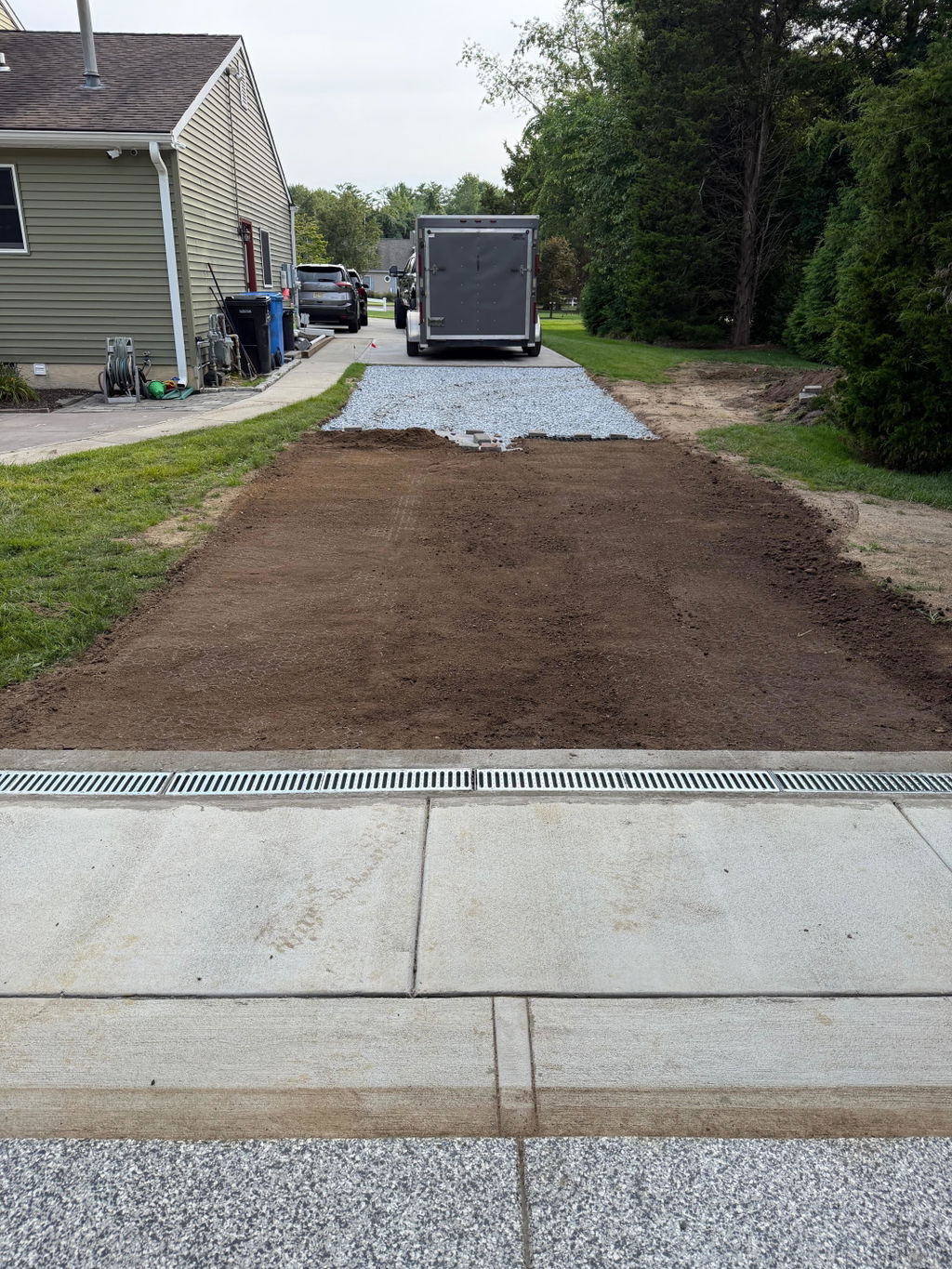
- Excavate. Remove unsuitable soil and excavate deep enough for the aggregate base plus the paver and soil. Longview's product guidance calls for a 4 to 6 inch aggregate base directly below the pavers; without that base a "cookie cutter" effect occurs as the pavers punch into soft ground.
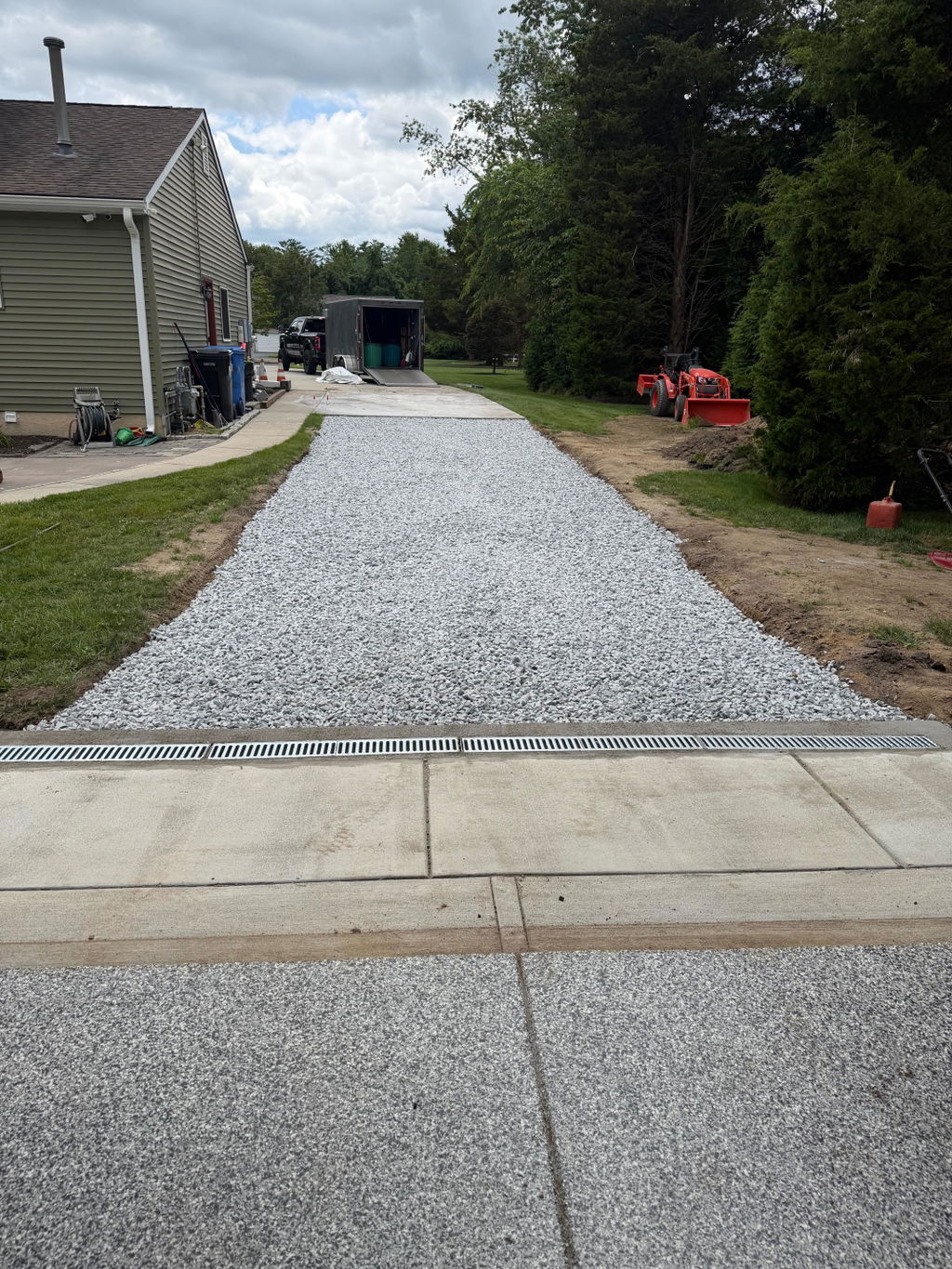
- Place the base course. Use a free-draining aggregate (NDS suggests AASHTO #57 stone or a local equivalent), placed over the prepared subgrade in lifts not exceeding 6 inches.
- Compact each lift. Compact every lift separately to a minimum of 95 percent Modified Proctor density, so the base is firm and uniform before the pavers go down.
- Optional sandy loam layer. An engineer may add about 2 inches of sandy loam between the paver and the gravel base; if so, place a non-woven geotextile filter fabric between the sandy loam and the base to keep fines from migrating into the stone.
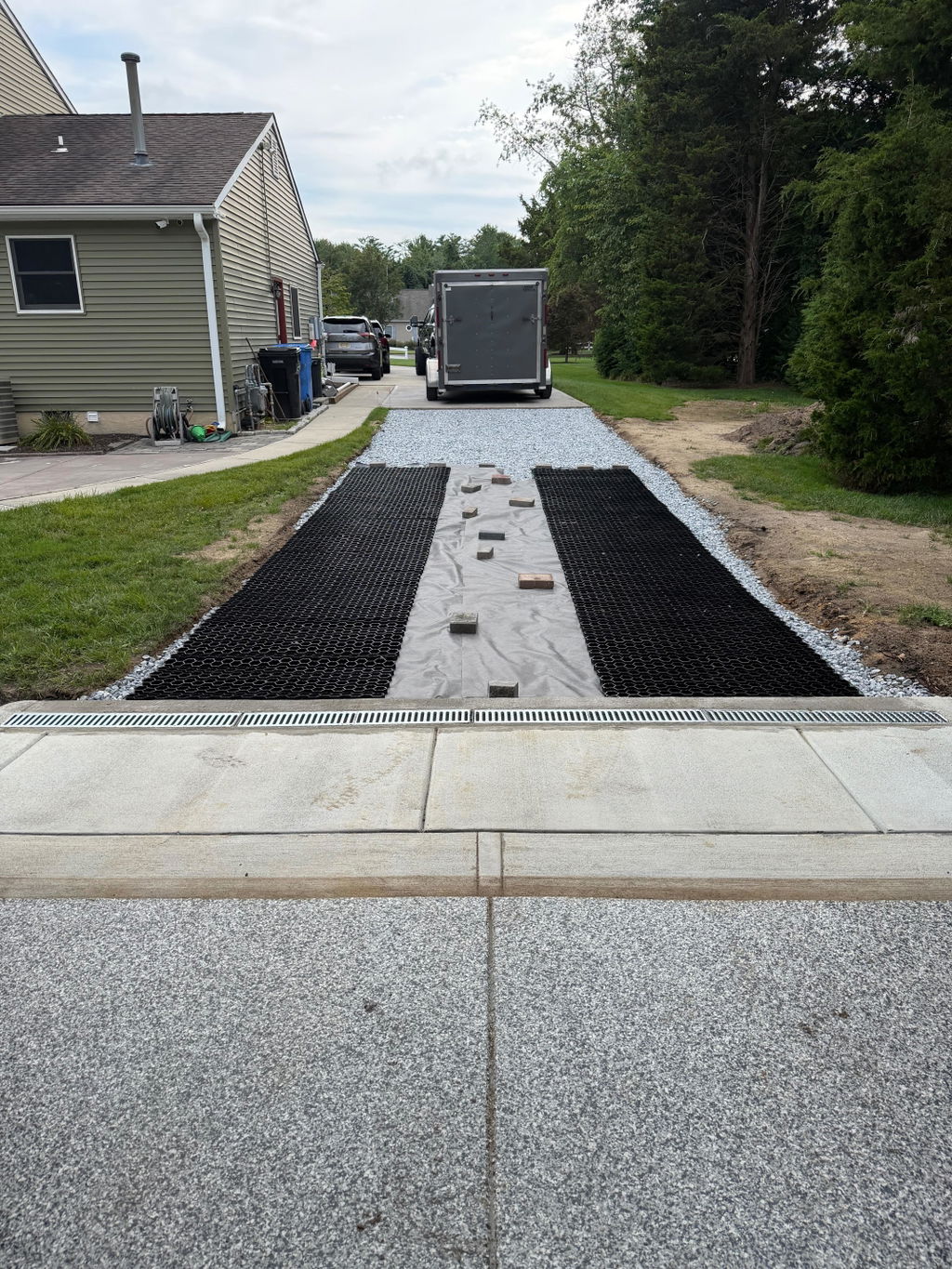
- Roll out and connect the pavers. Unroll the mat over the prepared base; the top-down locking tabs snap together with no tools, and each 2 by 2 foot section has 72 honeycomb cells.
- Stake the pavers. Anchor with the supplied stakes (each roll ships with 40 stakes, 12 inch by 3/8 inch galvanized, NDS part GPSTAKE), following the recommended staking pattern. Use edge restraints at borders to prevent creep.
- Fill with soil and plant. Fill the cells to the top surface with sandy loam or loam soil (sand is not acceptable), leaving a minimum of 1-1/2 inches for grass pavers and soil. Seed, sod, or hydroseed, and plant within 30 days of installing the pavers.
- Establish before traffic. Keep vehicles off until the grass is sufficiently established to handle traffic.
The rigid Tufftrack pavers follow the same base logic, a compacted, free-draining aggregate base placed in lifts and compacted, then a lightly compacted planting base, with the 2 by 2 foot units laid and interlocked over the top and filled with soil and grass. Because Tufftrack is 1-1/2 inch thick and rigid, it suits the heavier or more frequent loads where you want extra stiffness underfoot.
Load and durability specs
For context on why the base matters, the EZ Roll pavers have an unfilled compressive strength in the range of about 53,683 to 57,890 psf and are rated to support H-20 and H-25 vehicle loads, with a life expectancy around 25 years when well maintained. Each paver weighs about 2.31 pounds and is made of HDPE with UV inhibitors. Those load ratings assume a properly prepared and compacted base, which is why the base-prep steps above are not optional.
Not sure which product fits your site? Use the Permeable Paver Selector, our free interactive tool under the Resources menu, to answer a few plain-language questions and get matched to the right NDS grass or gravel paver system and size for your project.
Shop Grass Driveway Pavers
NDS EZ Roll and Tufftrack driveway pavers, with free shipping.
Shop NDS Grass and Gravel PaversUse the Paver SelectorFrequently Asked Questions
What are grass driveway pavers?
Grass driveway pavers are reinforcement grids installed beneath a grass driveway surface. They spread vehicle weight across a compacted base so the soil stays loose and grass keeps growing, making a green driveway that will not rut or wash out.
Which grass driveway pavers should I choose?
EZ Roll Grass Pavers are flexible honeycomb rolls that install fast over large driveways, while Tufftrack is a rigid 2 by 2 foot interlocking paver for heavier or more frequent traffic. Both carry vehicle loads.
How are grass driveway pavers installed?
Excavate and build a compacted, free-draining base to spec, place the pavers (unroll and pin EZ Roll, or lay and connect Tufftrack), and fill the cells with soil before seeding or sodding. The base is the load-bearing layer.
Are grass driveway pavers better than a bare grass driveway?
Yes. Bare grass ruts and turns muddy under tires because the soil compacts. Grass driveway pavers carry the load and prevent that compaction, so the surface stays firm and the grass survives.
How do grass driveway pavers compare to asphalt or concrete?
They are permeable, so rain soaks in rather than running off, and they stay cooler and greener. They are often friendlier to stormwater requirements than hard paving while still supporting vehicles.
What base do NDS grass pavers need?
NDS EZ Roll Grass Pavers need a compacted, free-draining aggregate base directly below them. Longview product guidance calls for a 4 to 6 inch aggregate base (NDS suggests AASHTO #57 stone or equivalent), placed in lifts not exceeding 6 inches and compacted to a minimum of 95 percent Modified Proctor. Without an adequate base, the pavers can punch into soft ground.
How are NDS EZ Roll pavers anchored?
Each grass paver roll ships with 40 stakes, 12 inch by 3/8 inch galvanized (NDS part GPSTAKE), installed on a recommended staking pattern, and edge restraints are used at borders to prevent creep. Gravel paver rolls also include stakes and are laid fabric-side-down with the lateral snap locks connected.