Questions?
(800) 621-5381
(800) 621-5381

What plastic pavers are and why they suit permeable paving
Plastic pavers are paving systems molded from durable plastic, often recycled, that provide a load-bearing surface lighter and more permeable than concrete. In the grass and gravel paver world, plastic grass pavers are the reinforcement grids that support vehicles while letting grass or gravel fill the cells. Plastic is favored here for its strength-to-weight, durability, and sustainability.

NDS EZ Roll plastic grass pavers honeycomb grid.
Plastic pavers are paving units molded from tough polymers rather than poured from concrete. In permeable paving, they take the form of grids — plastic grass pavers — that are installed over a base and filled with soil and grass or gravel. The plastic grid carries the load, while its open cells stay permeable and hold the fill in place.
The reinforcing grid sits over a compacted, free-draining base. It carries vehicle and foot loads and transfers that weight to the base, so the fill inside the cells — soil and grass, or gravel — is protected from compaction and rutting. Water infiltrates through the surface into the base and soil below, making the system both load-bearing and permeable.

NDS EZ Roll Gravel Pavers, plastic pavers made from recycled material.
Plastic grass and gravel pavers are used for driveways, overflow and event parking, fire lanes, golf cart paths, and access roads — anywhere a permeable, load-bearing surface is wanted without the weight and impermeability of concrete.
NDS EZ Roll Grass Pavers are designed to be placed on an engineer-specified compacted base. The base is what carries the vehicle load, so base preparation is the most important part of the job. A typical sequence:
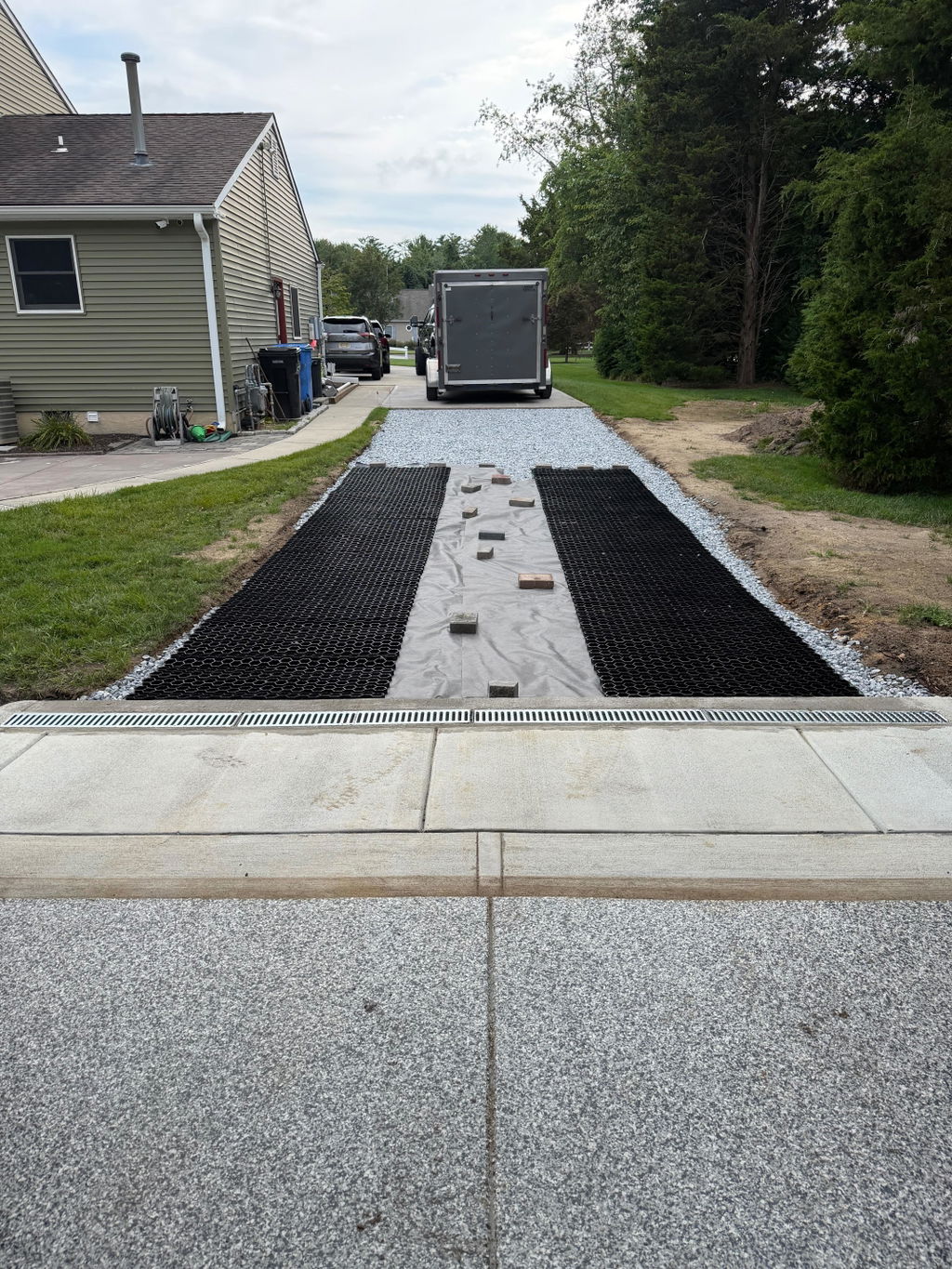
NDS EZ Roll Gravel Pavers install much like the grass version, but the rolls go down fabric-side-down and the cells are filled with gravel instead of soil and grass. A typical sequence:
For context on why the base matters, the EZ Roll pavers have an unfilled compressive strength in the range of about 53,683 to 57,890 psf and are rated to support H-20 and H-25 vehicle loads, with a life expectancy of 25 years when well maintained. Each paver weighs about 2.31 pounds and is made of HDPE with UV inhibitors. Those load ratings assume a properly prepared and compacted base, which is why the base-prep steps above are not optional.
For complete installation specifications, download the official NDS EZ Roll Grass Pavers Installation Guide (PDF).
Not sure which product fits your site? Use the Permeable Paver Selector, our free interactive tool under the Resources menu, to answer a few plain-language questions and get matched to the right NDS grass or gravel paver system and size for your project.
Durable, recycled-content NDS plastic pavers, with free shipping.
Shop NDS Grass and Gravel Pavers Use the Paver SelectorWhat are plastic pavers?
Plastic pavers are paving systems molded from durable plastic, often recycled, that provide a load-bearing surface lighter and more permeable than concrete. In permeable paving they take the form of grids filled with grass or gravel.
Are plastic grass pavers strong enough for vehicles?
Yes. The molded plastic grid carries and transfers vehicle loads to a compacted base, so plastic grass pavers support cars and even heavier vehicles while staying far lighter than concrete.
Why use plastic instead of concrete pavers?
Plastic grids are strong yet light and easy to install, resist moisture, rot, and freeze-thaw cracking, stay permeable through their open cells, and can be made from recycled material. NDS gravel pavers use 100 percent recycled plastic.
Are plastic pavers permeable?
Yes. Their open-cell design lets water infiltrate through the surface into the base and soil below, so plastic grass and gravel pavers reduce runoff compared to solid concrete or asphalt.
What NDS plastic paver systems are available?
EZ Roll Grass Pavers (flexible plastic honeycomb on a roll), EZ Roll Gravel Pavers (recycled plastic, for gravel), and Tufftrack (rigid plastic interlocking pavers, 1-1/2 inch thick, for higher loads).
What base do NDS grass pavers need?
NDS EZ Roll Grass Pavers need a compacted, free-draining aggregate base directly below them. Longview product guidance calls for a 4 to 6 inch aggregate base (NDS suggests AASHTO #57 stone or equivalent), placed in lifts not exceeding 6 inches and compacted to a minimum of 95 percent Modified Proctor. Without an adequate base, the pavers can punch into soft ground.
How are NDS EZ Roll pavers anchored?
Each grass paver roll ships with 40 stakes, 12 inch by 3/8 inch galvanized (NDS part GPSTAKE), installed on a recommended staking pattern, and edge restraints are used at borders to prevent creep. Gravel paver rolls also include stakes and are laid fabric-side-down with the lateral snap locks connected.